Why preferred language is useful personalization data
Many lead generation forms collect information that mainly helps the company.
- Country.
- Company size.
- Annual revenue.
- Phone number.
- Job title.
- “How did you hear about us?”
These fields can support qualification, segmentation, attribution, and reporting. Their value to the user is often less obvious.
Preferred language is different.
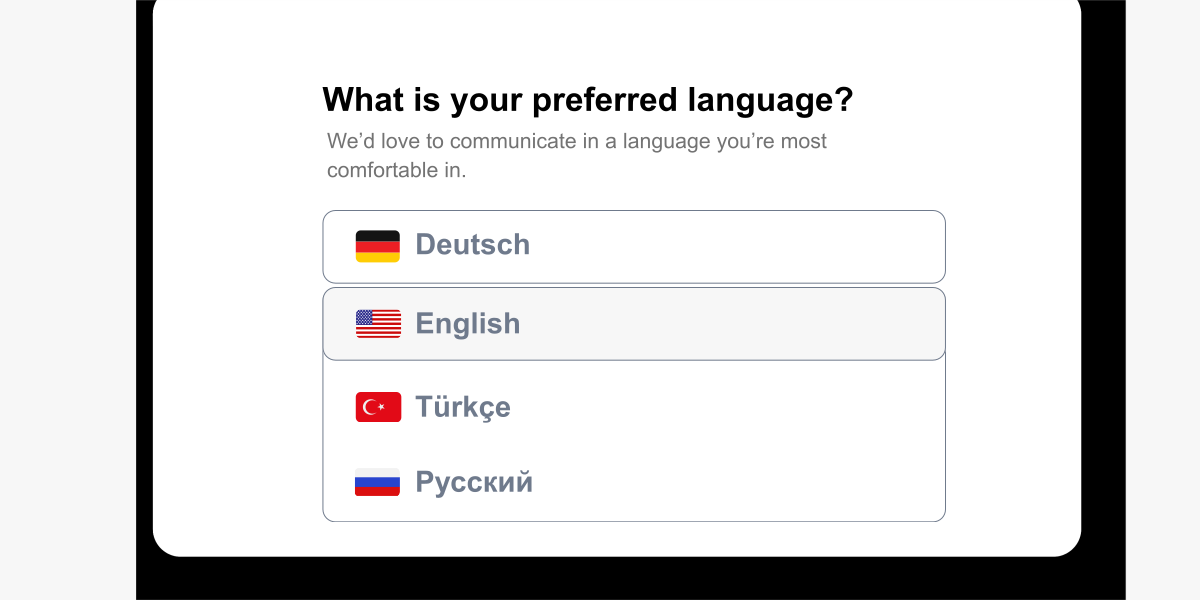
When someone sees a field asking which language they prefer, the benefit is clear. They know the answer can help them receive emails, calls, or support in a language they are more comfortable with.
That makes it a strong personalization signal.
It is also easy to collect in a clean format. A dropdown field with predefined language options is simple for users and easy for your CRM or marketing automation platform to process.
Language can create hidden friction
A prospect may understand the local language well enough for daily life, but still prefer another language for important decisions.
This matters for services where trust and clarity are important, such as B2B software, legal services, insurance, medical services, education, consulting, and high-ticket ecommerce.
Even when someone can read an email in the local language, it may take extra effort. They may translate parts of the message, delay replying, or avoid continuing the conversation.
Research on global e-retailing has linked better translated information with higher satisfaction, lower perceived risk, and stronger purchase intention. The exact impact will vary by industry, but the direction is clear: language affects comfort, trust, and response.
Country is useful. Preferred language is more precise.
Many companies already have multilingual resources. They may have an English version of the website, English-speaking salespeople, translated product pages, or support staff who can handle more than one language.
Yet their lead forms still only ask for country.
The country can tell you where someone is located. It cannot reliably tell you which language they prefer.
- A person in Germany may prefer English.
- A person in Switzerland may prefer French.
- A person in Belgium may prefer Dutch, French, German, or English.
- A person in Spain may prefer English for B2B communication.
Asking for preferred language removes the guesswork.
How to implement this tactic
Start with what your team can already support.
1. Check your internal language capabilities
Look at your existing resources:
- Which languages does your website already support?
- Which languages can sales handle?
- Which languages can customer support handle?
- Do you already have translated emails, brochures, or onboarding material?
- Do prospects already ask for support in another language?
You may find that the capability already exists. The process simply has not been connected to lead capture.
2. Add preferred language to your lead gen forms
Add a simple dropdown field.
Suggested label:
Preferred language
Suggested helper text:
Which language would you like us to use when we contact you?
For a German website, you can keep German selected by default. Users who prefer another language can change it in one click. This keeps the field low-friction.
3. Store the value properly
Save the answer in your CRM or marketing automation platform.
For example:
preferred_language = English
Use predefined values rather than free text. Clean data makes segmentation, routing, and reporting much easier.
4. Use it for routing and nurture emails
Once the field is stored, use it.
You can route English-speaking leads to English-speaking sales reps. You can send German leads to the German nurture sequence and English-preferring leads to the English sequence.
You do not need to create every language version at once.
Start with the second language your team can support well. For many companies in Germany, that may simply be English.
Where this creates value
This tactic can help in three practical ways.
- First, it improves the user experience. Prospects receive communication in a language they understand more easily.
- Second, it improves internal handling. Sales and support teams can respond in the right language from the beginning.
- Third, it can differentiate your company. Many businesses have multilingual teams, but their lead generation process does not use that capability. Your competitors are most likely not doing this.
The implementation effort is small compared with many personalization projects. The benefit is also easy to understand.
Common mistakes to avoid
- Do not offer languages your team cannot support properly.
- Do not collect the field and then ignore it.
- Do not rely only on country when language preference matters.
- Do not use free-text answers if a dropdown will work.
- Keep the setup simple. Add the field, store the value, connect it to routing and email nurture, then measure whether it improves replies, booked calls, and conversions.
Personalization does not have to start with a complex tool or a large automation project.
It can start with one useful question: Which language would you prefer us to use?
For companies in multilingual markets, preferred language is one of the simplest user personalization tactics to test. It is easy to collect, easy to understand, and directly connected to the user’s experience.




0 Comments